


Error message title

Error message title

Searching great energy plans for you
Should my next car be electric?
Ask yourself these 8 essential questions to decide if buying an EV in Australia is the right move for you.
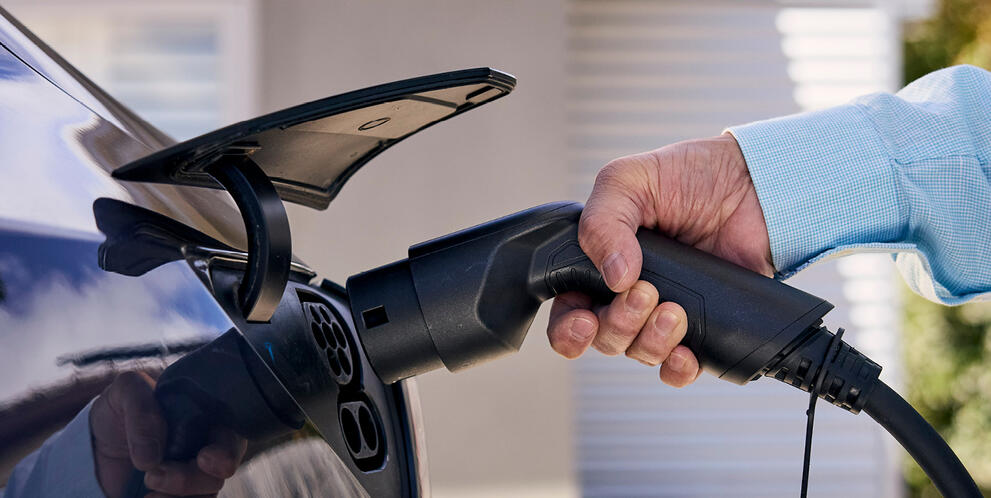
Not long ago, buying an electric vehicle (EV) felt like a decision for early adopters. Today, more Australians are asking whether an electric car should be their next vehicle, and whether an EV is worth it for their driving, budget and charging options.
The range of EVs available in Australia is growing, with battery electric and plug-in hybrid models now offered across more vehicle categories. The Australian Government’s electric vehicle guidance provides information on available vehicle types, charging and ownership considerations. But an EV is not automatically the right choice for every driver, and the decision involves more than comparing a battery with a fuel tank.
Should you choose an EV as your next car?
For many Australian households, an electric vehicle may be worth considering if most trips are predictable, home or workplace charging is accessible, and the total ownership cost works for the household budget.
An EV may be less suitable if reliable charging is unavailable, long-distance travel is frequent, or the purchase price of a suitable model is outside your budget. The best choice depends on how you drive, where you can charge and what the vehicle will cost over the time you own it.
So, before you start comparing electric vehicles in Australia, ask yourself these eight practical questions.
1. How far do you normally drive in an average week?
Think about commuting, school runs, shopping and regular weekend travel. Then compare that pattern with the range and efficiency information for the vehicles you are considering.
Published electric vehicle range figures are a useful starting point, but real-world EV range can vary with driving conditions, speed, weather, vehicle load and use of heating or air conditioning. You can compare vehicle energy use and emissions through the Australian Government’s Green Vehicle Guide.
Also consider how often you make longer trips. If they happen a few times a year, planning charging stops may be manageable. If long-distance travel is part of the weekly routine, range and charging speed may carry more weight.
2. Where would you charge your EV?
For many potential EV owners, charging is the make-or-break question.
The Australian Government recommends considering charging access before purchasing an EV, including home, workplace and public charging options. For some households, home charging may be straightforward. Others may need to investigate nearby public EV charging stations, strata approval or options for renters.
A standard power point and a dedicated home EV charger are not the same solution. Charging speed, equipment, electrical capacity and installation requirements vary. Use a licensed electrician for electrical work and follow the vehicle and charger manufacturer’s instructions.
ENGIE provides information about home EV charging options, including chargers that can work with rooftop solar.
3. What will it cost you to own an EV, not just buy it?
The purchase price matters, but it is only one part of the decision. A useful comparison looks at total ownership costs over the period you expect to keep the car, including:
- Purchase price and finance costs
- Home charging equipment and installation
- Home and public charging costs
- Registration, insurance and applicable taxes
- Servicing and maintenance
- Tyres and other consumables
- Resale value
- Government incentives or charges that apply in your location
Australian Government EV guidance notes that battery electric vehicles generally have fewer moving parts than petrol and diesel vehicles and may require less routine maintenance, although servicing, repairs and insurance still vary by vehicle.
Charging costs depend on the vehicle, electricity tariff, charging location and driving distance. Energy Made Easy’s tariff guide explains how single-rate and time-of-use tariffs work. Compare specific vehicles based on your expected kilometres and likely charging arrangements rather than relying on a broad claim that every EV is cheaper to own.
When comparing electric car running costs, include both home and public charging. ENGIE customers can also review available electricity and EV energy plans when estimating household charging costs. EV Flex Charge energy plan | Compare electricity and gas plans
4. Could home EV charging work with your energy setup?
An EV can become a significant electrical load in a household, so charging habits matter.
If you have rooftop solar, daytime charging may allow you to use more of your own solar generation when the vehicle is at home. If you are on a time-of-use tariff, charging times may also influence charging costs, as outlined in Energy Made Easy’s electricity tariff guide.
Neither benefit is automatic. The outcome depends on your solar generation, tariff, vehicle availability, charging equipment and household energy use. Before changing plans or installing equipment, check the vehicle requirements and seek qualified electrical advice.
5. What about public EV charging and road trips?
Public EV charging infrastructure is growing in Australia, but convenience still varies by location and travel route. The Australian Government’s EV guidance recommends considering your charging options and typical travel before choosing a vehicle.
Before committing to a vehicle, check the chargers you would realistically use. Consider connector compatibility, charging speed, access arrangements, possible queues and whether an alternative charging location is available nearby.
Road trips may require more planning than they do in a petrol vehicle. Whether that feels like a minor adjustment or a major inconvenience depends on how often you travel and how flexible the journey is.
6. Are the potential environmental benefits of EVs important to you?
Battery EVs produce no tailpipe emissions while driving, which can reduce local air pollution.
The whole-of-life environmental picture is more complex. Vehicle and battery manufacturing create emissions, and emissions from charging depend partly on the electricity source.
The Australian Government’s Green Vehicle Guide allows consumers to compare vehicle emissions and energy consumption. If environmental impact matters to you, compare like-for-like vehicles and consider how the EV would be charged and used over its lifetime.
7. Is now the right time for your household?
An EV might suit you now if most of your driving is predictable, charging is accessible and the ownership costs work for your budget.
Waiting may be reasonable if you cannot charge reliably, regularly travel beyond the suitable range of the available models, or the vehicles that meet your needs remain outside your budget.
A hybrid may also be worth considering for some drivers, but hybrids vary significantly. Compare fuel use, electric range, charging requirements and total costs rather than assuming every hybrid offers the same compromise.
8. Should you choose an EV or a hybrid?
The answer depends on how you drive, your regular driving patterns, where you charge, charging access, total ownership budget and what you want from your next vehicle.
For some Australians, an EV may already fit comfortably into everyday life. For others, a hybrid or a future EV purchase may make more sense.
Start with your regular driving, EV charging options and total ownership costs. The smartest next car is not necessarily the newest technology. It is the one that works for your life.
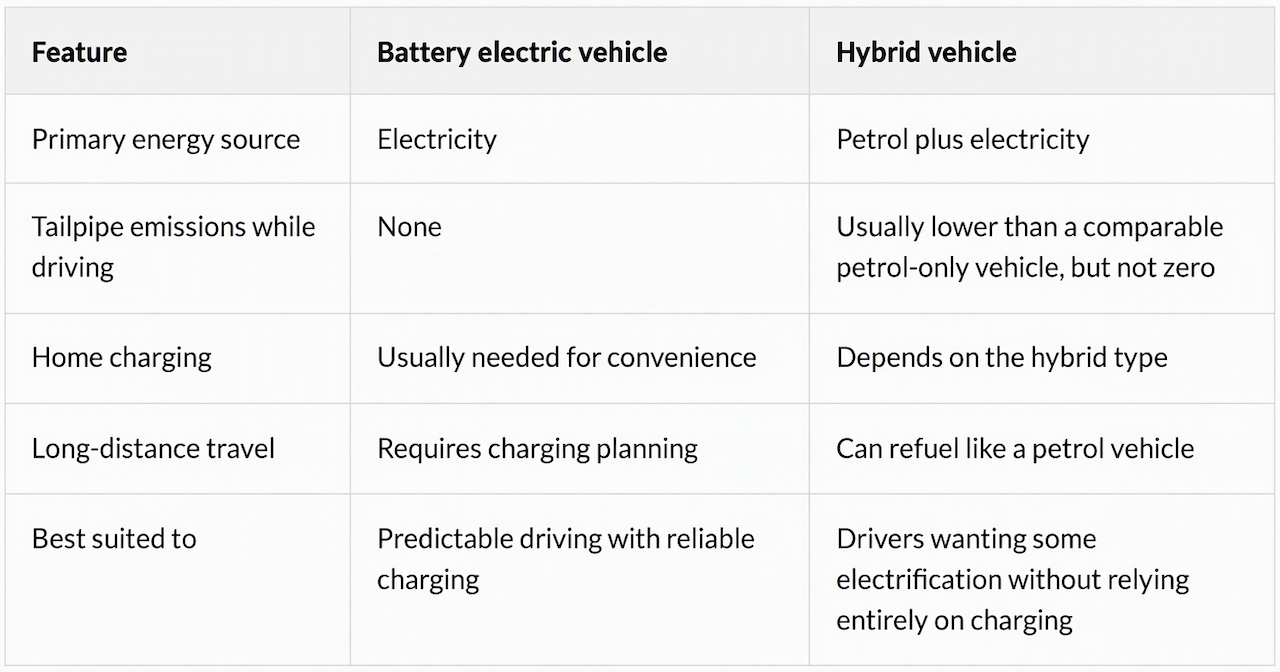
Electric vehicles vs hybrid: at a glance
Frequently asked questions about electric vehicles
Are electric cars cheaper to run?
They can be, but the result depends on the vehicle, electricity tariff, charging location, annual kilometres, servicing, insurance and purchase price.
Can I charge an electric vehicle at home?
Many EV owners charge at home using suitable equipment. Charging speed and installation requirements vary, so seek qualified electrical advice.
How far can an electric vehicle travel?
Range varies by model and can be affected by speed, weather, vehicle load, driving conditions and heating or air conditioning use.
Is an EV suitable for road trips?
It can be, although longer trips may require planning around compatible public chargers, charging speed and alternative locations
Is an EV better than a hybrid?
Neither option is automatically better. An EV may suit drivers with reliable charging, while a hybrid may suit drivers who want flexibility for frequent long-distance travel.
Can rooftop solar help charge an EV?
Daytime home charging may allow a household to use more of its own solar generation when the vehicle is available, but the outcome depends on the solar system, charger and household usage.
What should I compare before buying an EV?
Compare expected range, charging access, purchase price, finance, electricity costs, insurance, servicing, tyres, resale value and any government charges or incentives that may apply.
What electricity plan should I use for EV charging?
Compare available plans using your likely charging times and expected electricity use. Review tariff conditions and eligibility before switching.
Thinking about buying an EV?
Understanding your electricity use, charging routine and solar generation can help you decide whether an electric vehicle is the right choice for your household.
Explore ENGIE: EV Flex Charge energy plan | Home EV chargers | ENGIE Solar plan | Compare electricity and gas plans