


Error message title

Error message title

Searching great energy plans for you
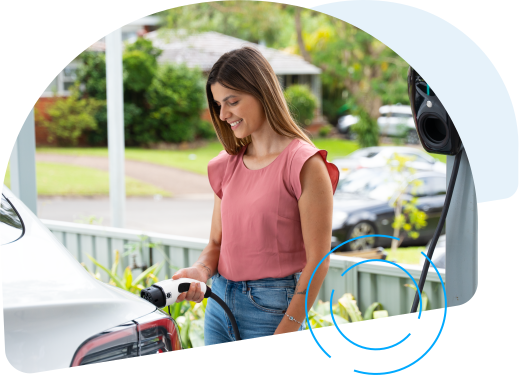
Save on EV chargers
Whether you already have solar or you're still thinking about it, there’s a smarter way to charge your EV.*
Charger coming in two sizes:
- 7kW - Up to 40km of driving range per hour of charge
- 22kW - Up to 120km of driving range per hour of charge

Ocular IQ Home Solar - 5m cable
Use your solar system to charge your car, supplying either 7kW or 22kW, with no need for extras or upgrades.
View exclusive ENGIE website offer
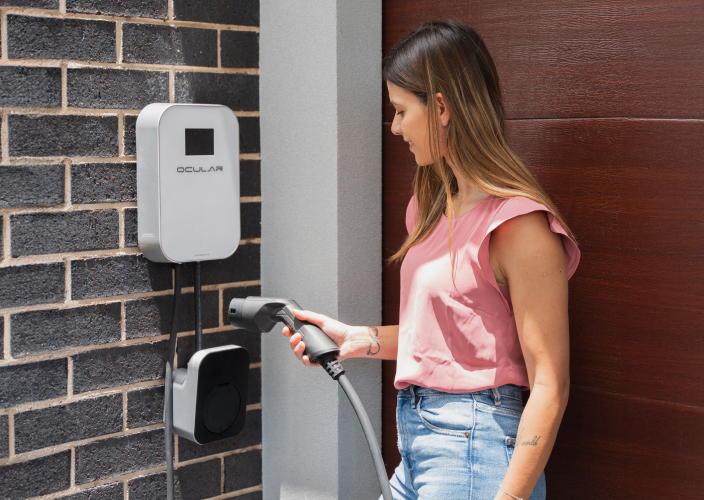
Ocular LTE Plus - 6m cable Type 2
A compact 7kW convenient charging solution, compatible with all Type 2 EVs.
View exclusive ENGIE website offer
* If you purchase a product from EVSE, our trusted EV partner, we will receive a commission.
Why we've partnered with EVSE

10 years' experience in EV charging
EVSE has been providing top-quality EV charging products and solutions since 2015.

Use solar for your car
Connect your solar system to an EV charger and charge your car using the sun.

Unlock extra discounts
Enjoy even more energy plan discounts with EV Flex Charge.

Exclusive prices
Discover exclusive ENGIE website offers on fast, reliable EV chargers.

Contact us
We're here to help. Fill out a few details on the form below and we'll connect you with an expert from EVSE.
EV charging in numbers

Save up to 70%
When you charge with an EV charger, compared to filling up with petrol.

Up to 10kW
Fast, safe, and ready for overnight charging - charge even quicker with a three-phase connection.

2 to 4 hours
That’s all it takes, on average, for your charge point to be mounted and connected to your solar, ready for use.
Save on EV chargers
Ocular IQ Home Solar - 5m cable
Use your solar system to charge your car, supplying either 7kW or 22kW, with no need for extras or upgrades.
View exclusive ENGIE website offer
Ocular LTE Plus - 6m cable Type 2
A compact 7 kW convenient charging solution, compatible with all Type 2 EVs.
View exclusive ENGIE website offer
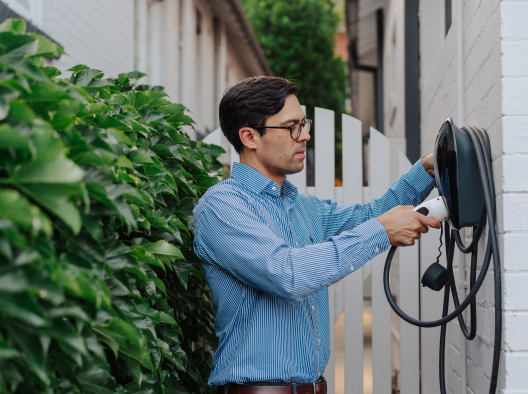
Why install an EV charger at home?
Switching to an electric vehicle doesn’t have to be complicated. EV chargers make home charging simple, convenient and cost-effective.
- Convenient: Plug in overnight and wake up every day with a full battery.
- Faster charging: Up to ten times quicker than using a standard 10 to 15 amp household socket.
Meet our partner EVSE
EVSE began with a simple insight: electric vehicles have the power to transform how we move, and how we protect the planet. Since then, they’ve grown into a leading provider of end-to-end EV charging solutions for homes, businesses and governments across Australia and New Zealand.

10 years' experience in EV charger installation
EVSE’s journey began in 2015, where co-founders Sam Korkees and Brendan Wheeler discovered the impact of electric vehicles (EVs) on decarbonisation overseas.

Dedicated to the future
EVSE is dedicated to shaping the future of mobility in Australia and New Zealand by advocating for clean, affordable and convenient electric vehicle infrastructure.

A more electric world
They envision a future where electric transportation is not only a choice but a seamless and integral part of everyday life, and strive to be at the forefront of this transformative journey.
Frequently asked questions
Does EVSE offer installation?
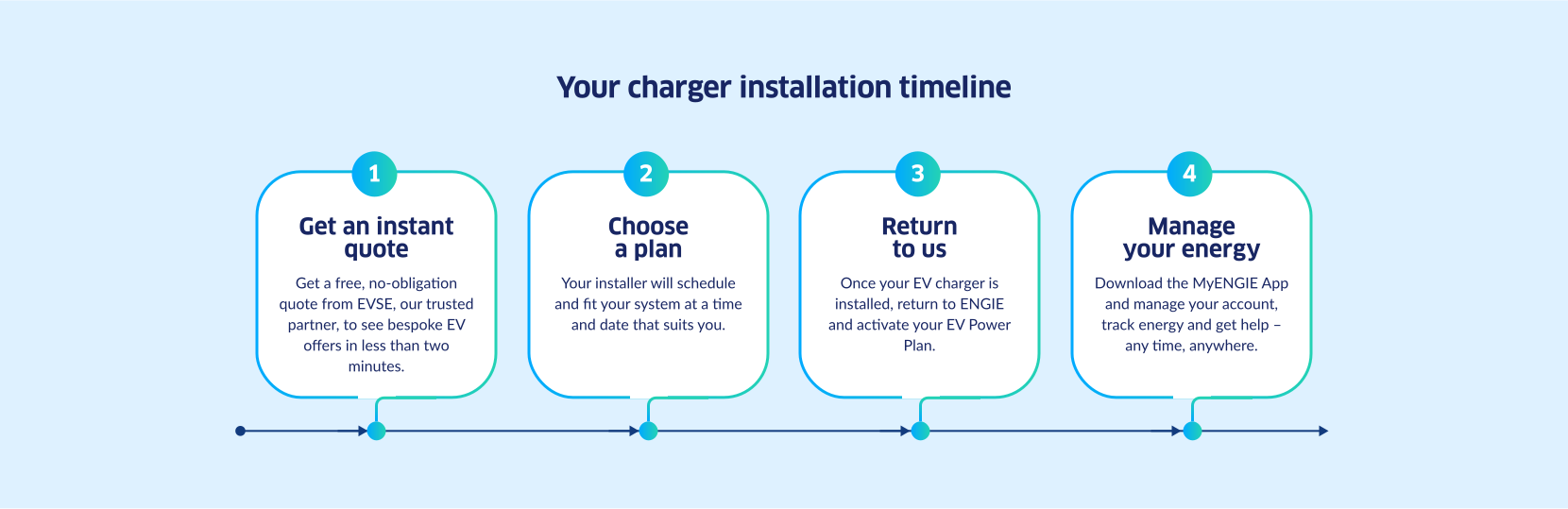
Yes, EVSE offers installation. While you are free to choose your own electrician, once you have chosen your product, one of our team members will contact you to advise you further about installation and answer any questions you may have.
What is the difference between a dedicated home EV charger and a portable charger?
A home charging unit is a level 2 AC charger. These are permanently installed by an electrician to the AC supply network (mains) of your home. Home charging stations are the safer option due to the dedicated circuit devices. These will also recharge your vehicle faster by supplying either 7kW or 22kW, depending on your home’s power supply, compared to 2.2kW with a portable charger using a standard 10-amp Australian outlet. However, charging speeds will depend on your vehicle.
How long does it take to charge an electric vehicle at home?
The charging time varies depending on the power rating of your home charger and the size of your vehicle’s battery. Most home chargers deliver between 7kW and 22kW, which typically allows for a full charge overnight, generally between 6 to 8 hours. Faster charging options are available but may require upgrades to your electrical system.
Can I install an EV charger myself?
No, for safety and compliance with electrical regulations, it is strongly recommended that a licensed electrician perform the installation. Professional installation ensures your charger operates safely, maximises performance, and may be necessary to qualify for government rebates or warranty coverage.
Is it safe to leave my electric vehicle plugged in overnight?
Modern electric vehicles and home chargers include multiple safety features to ensure safe overnight charging. These systems monitor battery temperature and charging status to prevent overcharging and overheating, making overnight charging a safe and efficient practice.
How long does it take to install a home EV charger?
Installation typically takes between 2 and 4 hours, depending on the complexity of the job. Factors that can affect installation time include your home’s existing electrical setup, the location of the charger, and whether any electrical upgrades (like switchboard modifications) are required. Your electrician will provide a more accurate estimate after assessing your home.