


Error message title

Error message title
Searching great energy plans for you
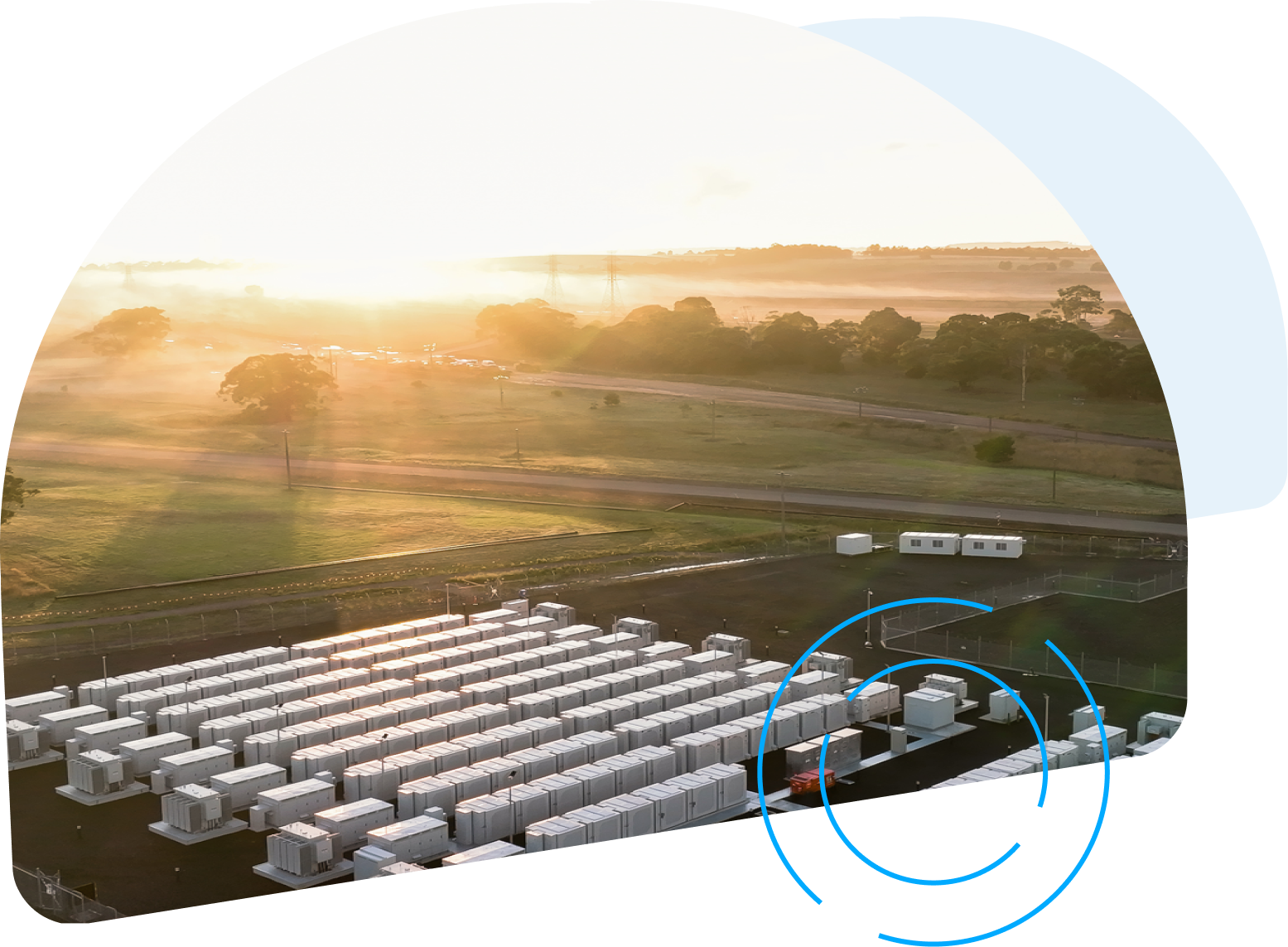
What is a Battery Energy Storage System (BESS)?
A Battery Energy Storage System (BESS) is a technology that uses a group of batteries to help stabilise electricity grids and store energy for when it is needed.
As defined by the Australian Renewable Energy Agency (ARENA), “batteries are an energy storage technology that uses chemicals to absorb and release energy on demand” (ARENA, 2022).
What is the benefit of a BESS?
As Australia continues its transition to renewable energy, there will be an increasing supply of solar and wind-generated power. Thanks to utility-scale BESS, electricity grids can store renewable energy during periods of excess supply for periods when there is a shortage of renewable energy, for example periods with heavy cloud limiting solar energy production or low wind.
The BESS will discharge energy during periods in which energy demand is higher than the renewable energy supply at that moment, supplying renewable energy instead of having to rely on fossil fuel power plants. In this way, more renewable energy can be integrated into the electricity system without jeopardising the delicate balance between electricity supply and demand
Design and Approvals
How are battery sites selected?
Locations for BESS sites are strategically selected based on multiple factors, including proximity to power networks and connection points, environmental and cultural heritage considerations, land availability, and regulatory compliance.
What is involved in designing a BESS?
Developing and constructing a BESS is a complex process involving several key stages. Once a site is selected, independent technical experts assess the location for any environmental and social impacts, while the developer obtains the necessary approvals from state, local, and federal authorities.
Based on ENGIE’s global experience in BESS, a comprehensive set of requirements has been created that has to be met in addition to all applicable laws and regulations. Examples of these requirements are:
- ENGIE performs due diligence on the BESS technology used, verifying it meets the best available safety requirements, above and beyond regulations. A technical qualification process is in place, supported by our global BESS experts, which informs us which BESS products are acceptable for ENGIE to use. Conversely, BESS products that do NOT meet our requirements, are not considered and thus will not be used.
- The proposed BESS layout is thoroughly reviewed to ensure we can construct and operate it in the safest way possible. This is about providing adequate space and clearances to facilitate construction, maintenance, repairs, etc. Local experts are consulted to ensure all relevant local requirements are met, and their feedback is incorporated into the design process.
- A particular effort is also put into the selection of the contractors who will build the BESS to ensure that suppliers are meeting ENGIE’s stringent requirements in terms of health and safety, experience with BESS, experience within the locality, respecting ENGIE’s specifications, etc.
Once approvals and planning requirements are completed, the construction phase can commence. Construction includes building access roads, preparing the site through groundworks, installing the foundations, installing the BESS equipment, wiring up all the equipment, and finally connecting to the grid.
Once grid connected, the BESS will undergo a wide set of commissioning tests to ensure it operates as expected prior to obtaining approval to commercially operate the BESS.
Agricultural, Environment and Health Impacts
What is the environmental impact of BESS?
BESS can be considered environmentally friendly due to their contribution to reduced emissions by allowing for more renewable energy to be integrated in the electricity grid. However, construction and operation can impact local ecosystems and wildlife, if not managed carefully. ENGIE is committed to carefully planning for any impacts, and we engage with industry experts to help minimise or mitigate any impacts as much as possible.
How do BESS impact wildlife?
Protection of biodiversity and native flora and fauna will be managed by Environmental Management Plans that must be prepared and implemented by specialists and approved prior to construction commencing. Depending on the local context, protection measures can include:
- Mapping and understanding of native flora and fauna.
- Pre-clearing protocols including inspections, exclusion zones and ongoing monitoring.
- Spotting and handling program to ensure safe relocation of any animals found during construction.
- Rehabilitation of all temporarily disturbed areas etc.
Does a BESS pose a threat during extreme weather events?
Across ENGIE’s projects, industry professionals are engaged to undertake a series of specialist assessments and inform our mitigation measures with regard to potential hazards and risks, including fire, flooding, storms and extreme winds.
The results of this project-specific assessment are then included in the design requirements for the BESS, making sure it is resilient for the identified hazards and risks. This is complemented with Emergency Management Plans developed and tailored for each projects which are made publicly available.
Community Engagement
How will you consult the community?
ENGIE is committed to open and transparent engagement with stakeholders and welcomes the opportunity to work with local residents and community members.
Stakeholder and community consultation will occur across all stages of development. ENGIE will actively engage with landholders and communities throughout the scoping phase to identify local considerations that will assist in developing a design for new BESS.
How can the community get involved or benefit from the BESS project?
ENGIE acknowledges that our renewable energy projects can change the local landscape and communities, and this is why we are dedicated to sharing the benefits of our projects and creating positive social and economic outcomes for local communities.
Where possible, ENGIE will try to create jobs for local people and will also engage with First Nation groups and local suppliers. Whether it’s earthworks, infrastructure, building contractors, machinery operators, engineering, accommodation, administration, catering, freight and cleaners – several skills and suppliers are required, especially during a project’s construction phase.
In addition to employment opportunities, ENGIE considers a range of benefit sharing initiatives that are specifically designed to meet the needs of local residents, First Nation groups, business owners and community groups. The benefits are aimed at supporting the whole community, whether it be through local procurement, suppliers and other businesses, opportunities for employment and development of skilled workers, funding for clubs and community groups, increased visitation and opportunities for tourism, or support for local activities and events.
Fire Risks
Are there fire risks to BESS?
ENGIE is committed to adequately maintaining sites and implementing Fire Management Plans to prevent fires.
As part of the technology qualification procedure, an in-depth fire safety assessment is conducted, which provides the necessary
information to create a comprehensive Fire Management Plan, which includes among others:
- Fire detectors are installed on-site, and staff will assess the situation and escalate to emergency services if necessary.
- Fire Breaks are developed across the site and vegetation is maintained to reduce the overall potential fire fuel load.
- Any external fires are consistently monitored onsite to ensure preparedness in the event of any external fire risk.
- Regular interactions with the local fire authorities which include holding a kick off meeting with local fire authorities and several site visits by local fire personnel.
- All approved site vehicles carry 9 litre water fire extinguishers, in addition to normal vehicle requirements.
- During high-risk fire periods all hot works will only be completed under specific permits to work.
- On total fire ban days, no hot works will be conducted onsite.
Is the fire risk on all ENGIE assets or project sites managed in the same way? Are they all covered by the same plans and are the same actions taken?
Some of the operational sites have requirements split into three documents:
- an overarching Emergency Management Plan,
- a Fire Management Plan, and
- a Risk Management Plan
while some cover the same fundamentals in a single document, as each state has varied legislative requirements.
Noise & Traffic Impacts
Will I hear the BESS?
Yes, BESS do create noise, primarily from the cooling systems, inverters and transformers in the units. However, the impact on the community depends on the distance from the BESS and the implementation of noise control measures. ENGIE will comply with any regulations regarding noise management.
How will traffic be managed during the construction phase?
A BESS will require a variety of materials and equipment to be delivered to the site. ENGIE will prepare a Traffic Management Plan in consultation with the relevant road authorities to ensure that any impacts to local traffic are minimised.
End of Life / Decommissioning
What is the typical lifespan of a BESS?
Depending on the type of battery used and how well it is maintained, a BESS is estimated to have a lifespan of up to 20 years.
What will happen to the BESS and other infrastructure at the end of the project?
Decommissioning is always the responsibility of the BESS owner. ENGIE will be required to remove all batteries and other materials as part of the Government’s approval conditions and landowner agreements. As part of standard approval conditions, a decommissioning plan will be required to be submitted to the relevant State Department for approval before construction of the BESS can commence.
Due to safety risks like fires or chemical leaks, end-of-life batteries require specialised handling, transportation, and disposal through approved operators as industrial-scale batteries must be processed at facilities equipped to neutralise hazardous components. If a business case arises near the end of life to ‘repower’ and extend the operating life of the BESS, a new approval process would be initiated. Nearer to the end of project life, the community will be consulted about the process of decommissioning, its steps and potential impacts.
