

Error message title

Error message title
Searching great energy plans for you
What is a community solar garden, and how can you get involved?
A community solar garden is an exciting way to tap into solar power without needing to install panels on your own roof. It’s especially helpful for people who rent, live in apartments or simply don’t have the right rooftop to go solar.
In a community solar garden, many people come together to share in a single solar array. In doing so, they can enjoy clean energy and bill credits from the energy they help generate. This model brings the benefits of solar to a broader community, including those who otherwise might be “locked out” of rooftop solar.
What is a community solar garden?
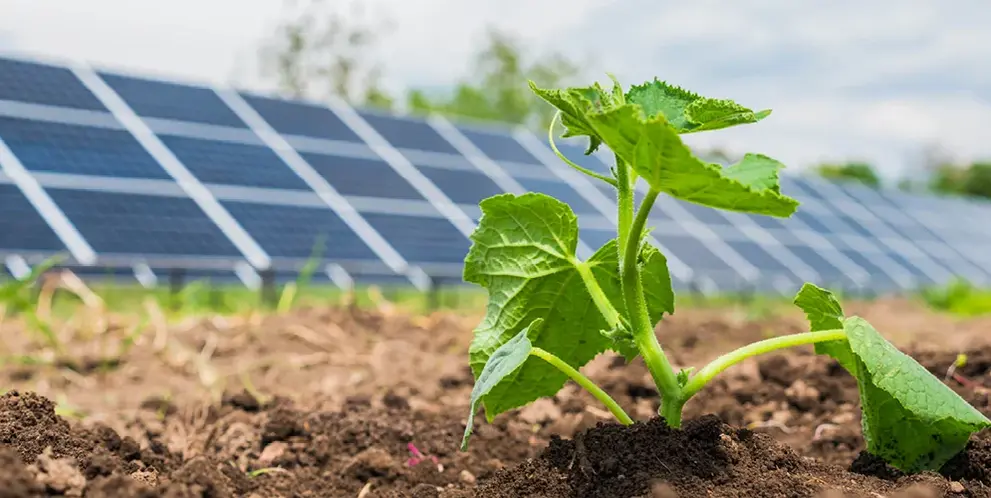
A community solar garden is a shared, centralised solar installation that people can buy into or subscribe to.
- It’s a grid-connected solar array located off-site, not on individual homes.
- Participants purchase or subscribe to a 'plot' of the system.
- Their allocated share generates energy that is sold into the grid.
- Households receive bill credits based on the energy produced by their portion.
- Maintenance and operation are handled by the solar garden operator, not the household.
How does community solar work?
The way community solar operates is straightforward once you understand the flow of energy and credits.
- A developer builds, owns and maintains the solar garden.
- Electricity produced goes into the grid rather than directly into your home.
- Your share of the solar generation is converted into credit on your electricity bill.
- Many projects require participants to be customers of a specific energy retailer.
- You may pay an upfront fee for a plot or a monthly subscription depending on the model.
How does community solar compare to home solar systems?
Community solar is different from traditional rooftop panels in cost, ownership and how the energy is used.
- Rooftop solar provides power directly to your home whereas community solar offers credit-based savings.
- Home systems require higher upfront investment and long-term investment costs.
- Community solar generally has lower entry costs and no maintenance responsibilities.
- Rooftop solar can deliver greater long-term financial returns, depending on the home and system size.
- Community solar is better suited to renters or homes without good roof space or sunlight.
What are the benefits of community solar?
Joining a solar garden offers a range of practical and financial advantages.
- It opens solar access to renters, apartment residents and shaded or unsuitable roofs.
- There’s no need to install or maintain any equipment.
- Participants earn ongoing bill credits, reducing electricity costs.
- Some schemes allow you to keep your share if you move, as long as you stay with the same retailer.
What are the disadvantages of community solar?
There are a few limitations to consider.
- Savings are often smaller than rooftop solar, which offers higher personal energy offset.
- Some programs involve long-term contracts or exit fees.
- Availability can be limited depending on your region.
- Participants don’t have control over system performance or operational decisions.
How can you get involved with a community solar garden?
Getting started usually involves finding a local project and understanding how their structure works.
- Search for community solar gardens in your state.
- Check whether the model uses plot ownership or a subscription.
- Confirm which energy retailer the project partners with.
- Sign up and link your share to your electricity account to start receiving credits.
- Track your credit amounts by checking your regular energy bills.
Community solar gardens are a great option for anyone who wants the benefits of renewable energy without the hassle of installing rooftop panels. They make solar more accessible, lower barriers to entry and offer steady bill credits with no maintenance required.
While they may not deliver the same financial return as owning your own solar system, they’re a simple, low-commitment way to support renewable energy and potentially reduce your electricity costs. If you’re considering joining one, look for projects in your area and review how each scheme works to find the right fit for your home.