

Error message title

Error message title

Searching great energy plans for you
ENGIE and Foresight welcome CIS support for expansion of Willogoleche Wind Farm
ENGIE and its project partner Foresight Australia have welcomed today’s announcement that the proposed Willogoleche 2 Wind Farm has been successful in the Australian Commonwealth Government’s Tender 4 of the Capacity Investment Scheme (CIS).
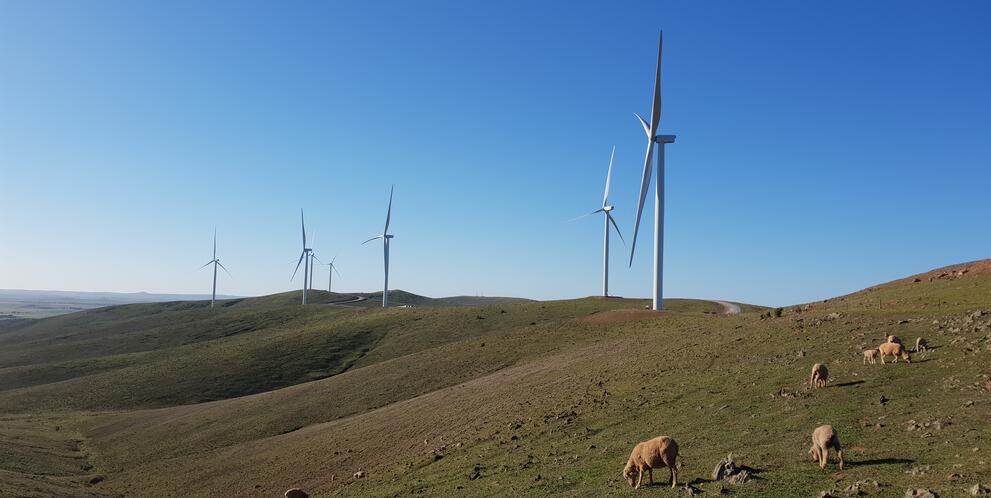
ENGIE and its project partner Foresight Australia have welcomed today’s announcement that the proposed Willogoleche 2 Wind Farm has been successful in the Australian Commonwealth Government’s Tender 4 of the Capacity Investment Scheme (CIS).
The 119 MW Willogoleche Wind Farm is located approximately five kilometers northwest of Hallett, South Australia, and was commissioned by ENGIE in 2019, with Foresight acquiring a 75% interest in the joint venture platform through which the project is owned in 2020.
The expansion of the project will nearly double its existing capacity, adding up to 20 turbines and 108 MW of new renewable energy to the South Australian energy grid and National Electricity Market.
ENGIE in Australia’s Managing Director of Renewables and Batteries, Laura Caspari, said Willogoleche had been a hallmark of successful renewable energy development, and a perfect site for expansion.
“The development and operation of the first stage of Willogoleche has enjoyed great community support, and for years has been the jewel in the crown of ENGIE’s South Australian renewables portfolio. With the additional backing of the Federal Government, Willogoleche will go from strength to strength,” said Ms Caspari.
ENGIE expects construction of the Willogoleche 2 Wind Farm will commence in late 2026 and be commissioned in 2028, helping to advance its goal of delivering 3 GW+ of renewable energy in Australia by 2030.
“The award of a CIS Agreement helps provide the momentum to accelerate investments like Willogoleche 2, and in turn deliver local employment opportunities, regional economic benefits, and long-term energy resilience,” said Ms Caspari.
Foresight Australia’s Executive Director and Portfolio Manager of its Australian Renewables Investment Fund (ARIF), Daniel Beaver, said the “CIS support demonstrates growing confidence in long-term, bankable renewable energy projects that bring together quality site locations, proven delivery capability, and institutional capital.”
“The Federal Government’s support through the CIS sends a powerful signal to local and foreign investors about Australia’s commitment to the energy transition,” Mr Beaver said.
“Foresight was among the first investors in Australia’s renewable energy sector and today manages one of the country’s largest portfolio’s spanning operating wind, hydro, solar and development. Backed by leading superannuation and pension funds, we see strong and growing appetite for projects like Willogoleche 2 which can leverage the existing platform footprint and capability to unlock new clean energy and storage capacity.”
The expansion of the Willogoleche Wind Farm builds on ENGIE’s energy footprint in South Australia, including two operating wind farms – the nearby 119MW Willogoleche Wind Farm and 46 MW Canunda Wind Farm in the state’s southwest – and three gas peaking power stations, including the 489 MW Pelican Point Power Station in Outer Harbor.
“South Australia has been at the forefront of the energy transition in Australia, and we look forward to adding to our legacy positions in retailing, flexible power, and increasingly renewables and storage in this key state,” said Ms Caspari.
Once the wind farm starts to generate electricity ENGIE and Foresight have committed to a community benefit fund of $65,000 per year for the life of the project, which will include ENGIE offering up to $1,000 in annual electricity rebates through its retail arm to eligible near neighbours, and a separate dedicated First Nations benefit fund. A $30,000 Community Grants Program was run in 2025 that funded five local not-for-profit organisations and it will continue to be run annually during the project development phase.