

Error message title

Error message title
Searching great energy plans for you
Debunking Energy Transition Myths – Part 2: Big Batteries (BESS)
"Big Batteries" - officially known as Battery Energy Storage Systems (BESS) - are becoming the unsung heroes of the energy transition.
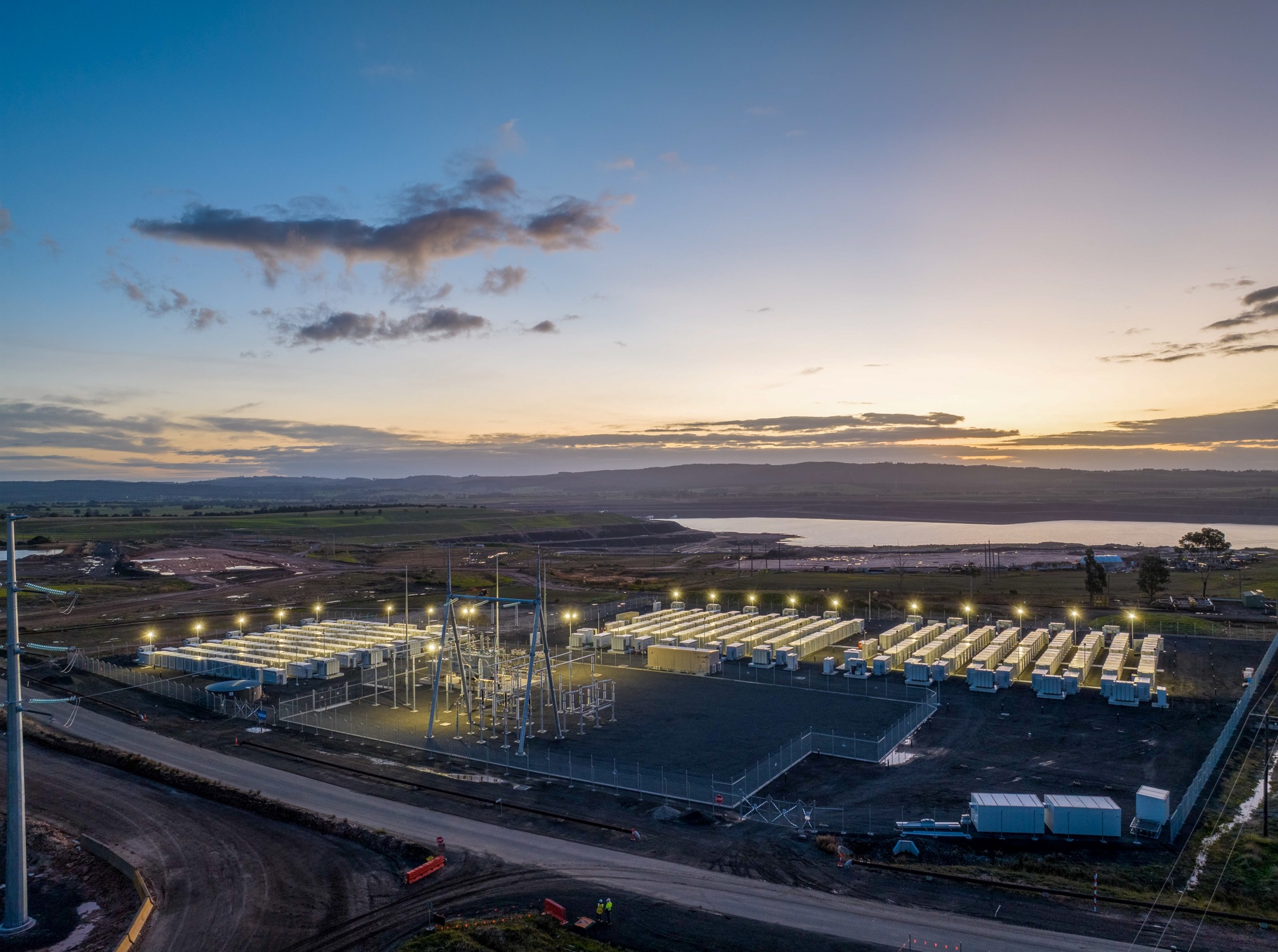
"Big Batteries" - officially known as Battery Energy Storage Systems (BESS) - are becoming the unsung heroes of the energy transition. Think of them as giant rechargeable power banks for the grid: they soak up extra energy, then release it when we need it most.
As we tackle the enormous challenge of climate change, technologies such as BESS are playing an increasingly important role.
In this article, we’re addressing the common myths we hear, and presenting the facts you need to know.
First of all - what is a Big Battery, also known as a BESS?
A BESS is a technology that uses a group of batteries to help stabilise the electricity grid by balancing energy supply and demand, by storing surplus (renewable) energy for when it is needed.
As defined by the Australian Renewable Energy Agency (ARENA), “batteries are an energy storage technology that uses chemicals to absorb and release energy on demand” (ARENA, 2022).

Myth #1: "BESS are only useful for solar and wind energy."
While BESS are commonly paired with renewables, they also support grid stability, peak shaving, frequency regulation, and backup power for various energy sources. Because BESS do not rely on conventional rotating generators that need time to ramp up or down, but use power electronic inverters instead, they are able to adapt their power output almost instantaneously, being able to reach much faster to supply-demand fluctuations than a conventional coal-fired or gas-fired power station.
For example, ENGIE has commissioned a standalone BESS adjacent to the former Hazelwood Power Station. The Hazelwood BESS is a 150MW/150MWh battery system that uses advanced software to control its charging and discharging cycles. This allows it to ramp up to full charging power within seconds when there is a surplus of (renewable) energy being produced, storing the energy for discharge into the grid during times of peak demand.
The surplus energy could be from solar PV during sunny days, wind energy during windy days, but also energy from conventional power plants that are not able to reduce their power output any further.
Batteries are often associated with residential solar setups, but BESS can do much more - they help stabilise the entire energy system, regardless of the energy source.
Myth #2: "Batteries degrade too quickly to be worthwhile."
A lot of people associate battery degradation with their own experience, for example their cell phone’s battery degrading after a few years to a point they have to continuously recharge it or replace it altogether. However, there is a big difference between batteries used in consumer products and big batteries.
In big batteries, advanced battery management systems are often used that carefully monitor the battery cells to keep them in optimal condition, resulting in battery system warranties that can exceed 10 years. As battery chemistries are evolving, current state-of-the-art cell chemistries such as LFP (lithium iron phosphate) may even offer warranties of up to 20 years.
Furthermore, producers of big batteries test their systems to offer these warranties to companies such as ENGIE, who buy and operate them, providing detailed information on how these batteries will have a gradual reduction of their capacity over time as they are being cycled day in day out. This capacity degradation is accounted for when big batteries are being developed and built, and it’s still worthwhile for big battery developers to invest in them.
Myth #3: “BESS are too new and unproven.”
The technology for big batteries is not experimental anymore, and its core applications have been proven in real-world conditions for well over a decade now.
Early adopters like South Korea, Germany, and the U.S. have been running BESS projects for over a decade, and the lessons learnt from those have contributed to the improvements in big battery technology. This learning curve is still ongoing as more big batteries are being built and operated around the world, driving down their cost.
In Australia, we’ve proven its efficacy with the successful commissioning and operation of the Hazelwood Battery Energy Storage System in Victoria. Commissioned in 2023, this asset has the capacity to store the energy equivalent of an hour of energy generation from the rooftop solar systems of 30,000 Victorian homes, playing a critical role in increasing the state’s energy capacity and delivering further grid stability.
Conclusion
To create a smooth transition to cleaner energy sources and to increase the resilience of our electricity grid, we need to be able to separate fact from fiction and we hope this short article has shown the importance of BESS in the energy mix of the future.
If you found this information helpful, we encourage you to explore our Energy Portfolio and stay informed about our projects and assets in Australia.