

Error message title

Error message title
Searching great energy plans for you
Debunking Energy Transition Myths – Part 1: Solar Farms
As solar farm projects are being developed across Australia’s regional landscapes, so are the myths.
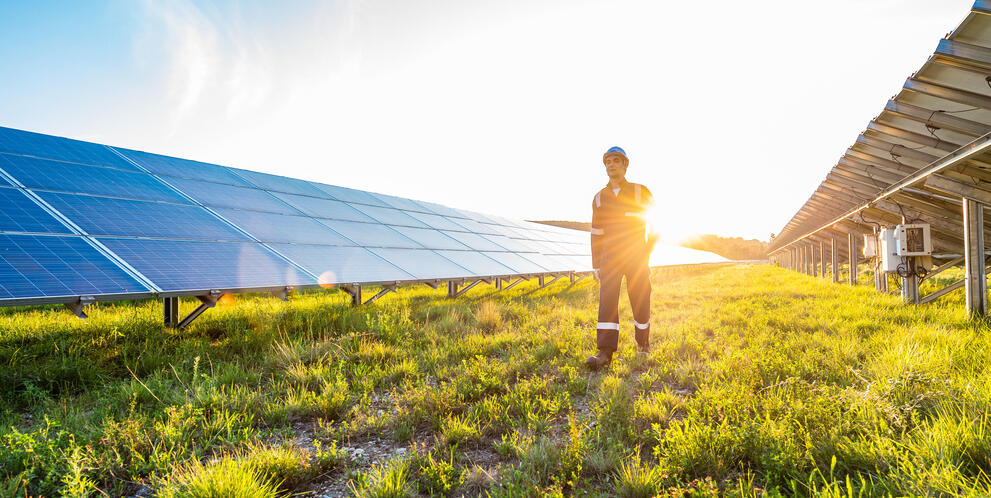
As solar farm projects are being developed across Australia’s regional landscapes, so are the myths.
More communities are encountering solar developments as the energy transition accelerates, and it’s important to address misinformation and rumours.
In this post, we’ll bust some of the most common myths about solar farms and explain what they really mean for land, communities, and the environment.
Myth 1: “Solar power doesn’t work on cloudy days.”
It’s true that solar panels generate less electricity on cloudy days - but that doesn’t mean solar farms stop generating electricity.
Solar panels still produce electricity in diffuse sunlight and while output is reduced, it’s not zero.
What about at night?!
More solar farms are now being paired with grid scale battery storage, allowing them to store excess energy generated during the day and to release it when the sun goes down. This helps smooth out supply and supports grid stability.
Myth 2: “All of these solar panels can’t be recycled”
Photovoltaic solar panels consist of 95% recyclable materials, including aluminium, glass, silicon, silver, copper, indium and germanium (Source)
As solar PV panels and counterparts come to their end of life, there is an industry-wide demand for PV recycling capacity. For example, ENGIE has a dedicated Research and Innovation (R&I) division to help identify, explore, experiment, and deploy solutions that will make the energy transition possible and apply them to our industrial facilities or those of our customers and partners.
Based in Belgium, ENGIE’s R&I team are working on recycling technologies and opportunities for the reuse of decommissioned materials. ENGIE is also looking to consolidate its research and practices to align with Australian vendors and agencies and meet local industry standards and capabilities.
There are now several solar PV recycling facilities in Australia that work to recycle end-of-life solar PV modules. This includes all associated materials such as cables, inverters, mounting structures and optimisers while using no chemicals. (Source)
As the peak body for the clean energy industry in Australia, the Clean Energy Council (CEC) is currently working with the industry to explore end-of-life and disposal processes for both the solar PV industry and the wind industry in Australia. The CEC has established a Manufacturing and Product Life Cycle Working Group to discuss issues and explore barriers to the reuse and repair of solar PV panels and help guide the direction of the CEC.
Myth 3: “Solar farms take up too much farmland and have significant environmental impacts”.
Many solar farms are built in areas that allow for dual land use, or what is known as Agrisolar.
Agrisolar refers to co-developing the same area of land for both solar power and agriculture to create mutually beneficial outcomes.
An example of agrisolar includes sheep grazing under solar panels.
The shade provided by solar panels reduces heat stress in animals, improves pasture quality and enhances animal welfare. Furthermore, grazing by the animals helps reduce maintenance costs for the solar facility. (Source)
While renewable energy is generally considered environmental friendly, construction and operation can impact local ecosystems and wildlife.
Through careful planning, technology advancements, strategic site selection and mitigation measures, renewable energy projects in Australia can, and do, minimise their impact. (Source)
ENGIE aims for careful planning of any impacts, and we engage with industry experts to help minimise or mitigate any impacts as much as possible.
Myth 4: “Solar farms will be far too noisy!’
While solar farms do produce some noise, depending on where the nearby receiver is located, the noise generated is generally low and can be effectively managed with proper planning and mitigation strategies. Solar farms can mitigate noise by optimal placement away from residential areas, regular maintenance and compliance with local noise regulations.
Myth 5: “There is no benefit to the local community.”
Solar farms can create local jobs, provide a passive income for landowners, and can fund community initiatives.
Where possible, ENGIE hopes to create jobs for local people and engaging with Indigenous and local suppliers. Whether it's earthworks, infrastructure, building contractors, machinery operators, engineering, accommodation, administration, catering, freight and cleaners – several skills and suppliers are required, during a project's construction and also operation phase.
In addition, ENGIE considers a range of benefit sharing initiatives that are specifically designed to meet the needs of local residents, business owners and community groups. The benefits are aimed at supporting the whole community, whether it be through local procurement, suppliers and other businesses, opportunities for employment and development of skilled workers, funding for clubs and community groups, increased visitation and opportunities for tourism, or support for local activities and events.
Why is renewable energy so important to communities?
Electricity generation is one of the largest source of greenhouse gas emissions, with the National Electricity Market (NEM) still largely dependent on coal-fired power stations in Australia. The NEM is one of the largest interconnected electricity systems in the world and connects the electricity grids of the six eastern and southern states and territories to deliver around 80 percent of all electricity consumption in Australia.
By supporting the transition to a greater mix of low-emission renewable energy sources, such as solar, communities can contribute to a more sustainable future for Australia.
Myth 6: “I’ve heard that Solar Farms are dangerous and prone to fires.”
ENGIE is committed to adequately maintaining sites and implementing Fire Management Plans to prevent fires, which are factored during the design phase and equipment and material selection.
If an emergency event was to occur, fire detectors are installed on-site, and staff will assess the situation and escalate to emergency services if necessary.
In addition to this, ENGIE has taken and continues to take numerous actions to reduce the risk of a fire on sites and comply with the Fire Management Plans, including:
- Selection of high-quality equipment and materials that meet all appropriate safety standards.
- Conduct regular inspections and maintenance to the project to identify and eliminate any potential fire hazards.
- All site personnel have completed local relevant bush safety courses.
- Fire Breaks are developed across the site and vegetation is maintained to reduce the overall potential fire fuel load.
- Any external fires are consistently monitored onsite to ensure preparedness in the event of any external fire risk.
- Regular interactions with the local fire authorities which include holding a kick off meeting and several site visits.
- All approved site vehicles carry 9 litre water fire extinguishers, in addition to normal vehicle requirements.
- During high-risk fire periods all hot works will only be completed under specific permits to work.
- On total fire ban days, no hot works will be conducted onsite.
Conclusion
We believe that solar will play an important part in Australia's future energy mix.
By understanding the facts, communities can make confident, informed decisions about supporting solar projects.
If you found this information helpful, we encourage you to explore our Energy Portfolio and stay informed about our projects and assets in Australia.