


Error message title

Error message title
Searching great energy plans for you
Which way should solar panels face? The answer may surprise you.
When you’re investing in solar, the way your panels face has a big impact on how much energy your home can produce – and how much it can reduce your ongoing energy costs. Most Australians assume that ‘north is best,’ and while that’s usually true, real-world results can vary depending on your home, climate and daily energy habits.
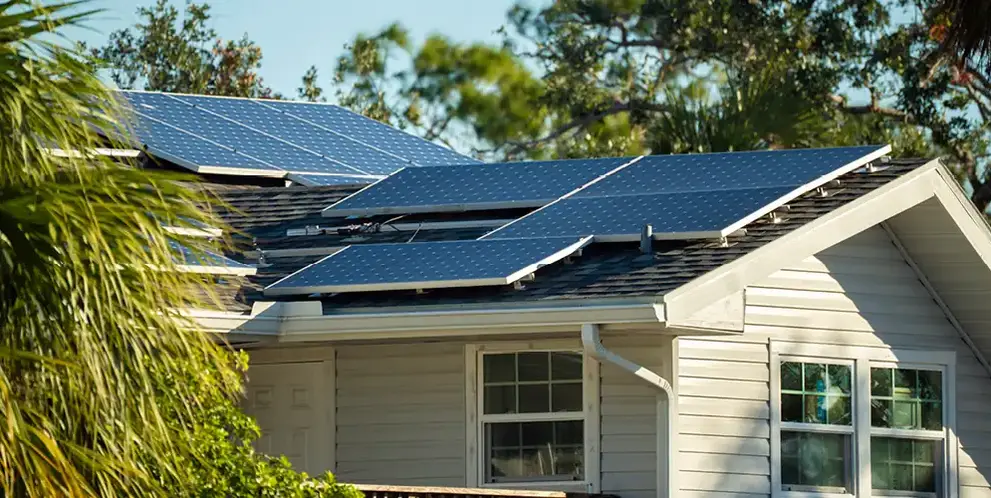
Why orientation changes your solar power output
Solar panels work hardest when they face the sun for the longest part of the day. That means the wrong direction can noticeably reduce efficiency – sometimes by 20 – 30%, depending on where you live. For example, south-facing panels can lose around 28% of potential generation on average.
But direction isn’t the only factor. Local temperatures, cloud cover, roof pitch and shading also shape how much energy you’ll produce. That’s why two homes on the same street can see very different results, even with similar systems.
What to expect from North, East, West and South-Facing panels
North: The classic high performer
North-facing panels deliver the strongest annual output in most Australian cities –often 99% or more of maximum possible generation. If your goal is total yearly production, north is still the gold standard.
East: Ideal for early birds
East-facing systems shine in the morning, producing earlier in the day. That’s helpful for households that use more energy before lunch — think brekkie, school prep and morning appliances.
West: Great for the after-work rush
West-facing panels hit their stride in the late afternoon and early evening. This makes them a smart match for families cooking dinner, running appliances or cooling the house after 3pm.
South: Lower output, but still useful
South-facing panels produce the least, but they’re not ‘wrong.’ In some climates, especially cooler regions, south can still be viable depending on roof pitch, shading and your overall system size.
Best orientation by region
Not every city performs the same. Slight shifts – even a few degrees east or west of north – can improve output in certain regions due to local cloud patterns or heat levels.
- Darwin has more flexibility because its sunshine hours are more consistent year-round.
- Hobart is more sensitive to direction, so small orientation changes can make larger differences in output.
Roof shape, size and other limits
Most households don’t have a textbook north-facing roof – and that’s okay. Your installer will work with what you’ve got.
- East–west roof layouts can increase self-consumption by spreading generation across the full day.
- Roof tilt, shading from trees or neighbouring buildings, and the amount of usable space all influence where panels can be placed.
How orientation affects feed-in tariffs
Your panel direction also changes when you export energy. In states where feed-in tariffs peak in the afternoon, west-facing panels may deliver better financial returns. More energy during peak periods can mean higher earnings from the grid.
Finding the best direction for your home
While north is generally the top performer, the best direction depends on your home layout, shade, climate and how (and when) you use energy. A licensed, accredited installer can assess your roof and recommend the orientation that delivers the best value over time.